Switzerland

June 2017

My family had wanted to do this trip for years. I was fourteen, in ninth grade. We took the TGV down from Paris and a slower train onward to Engelberg. Most of these are pictures of weather more than mountains, because the mountains kept disappearing into cloud and reappearing somewhere else.
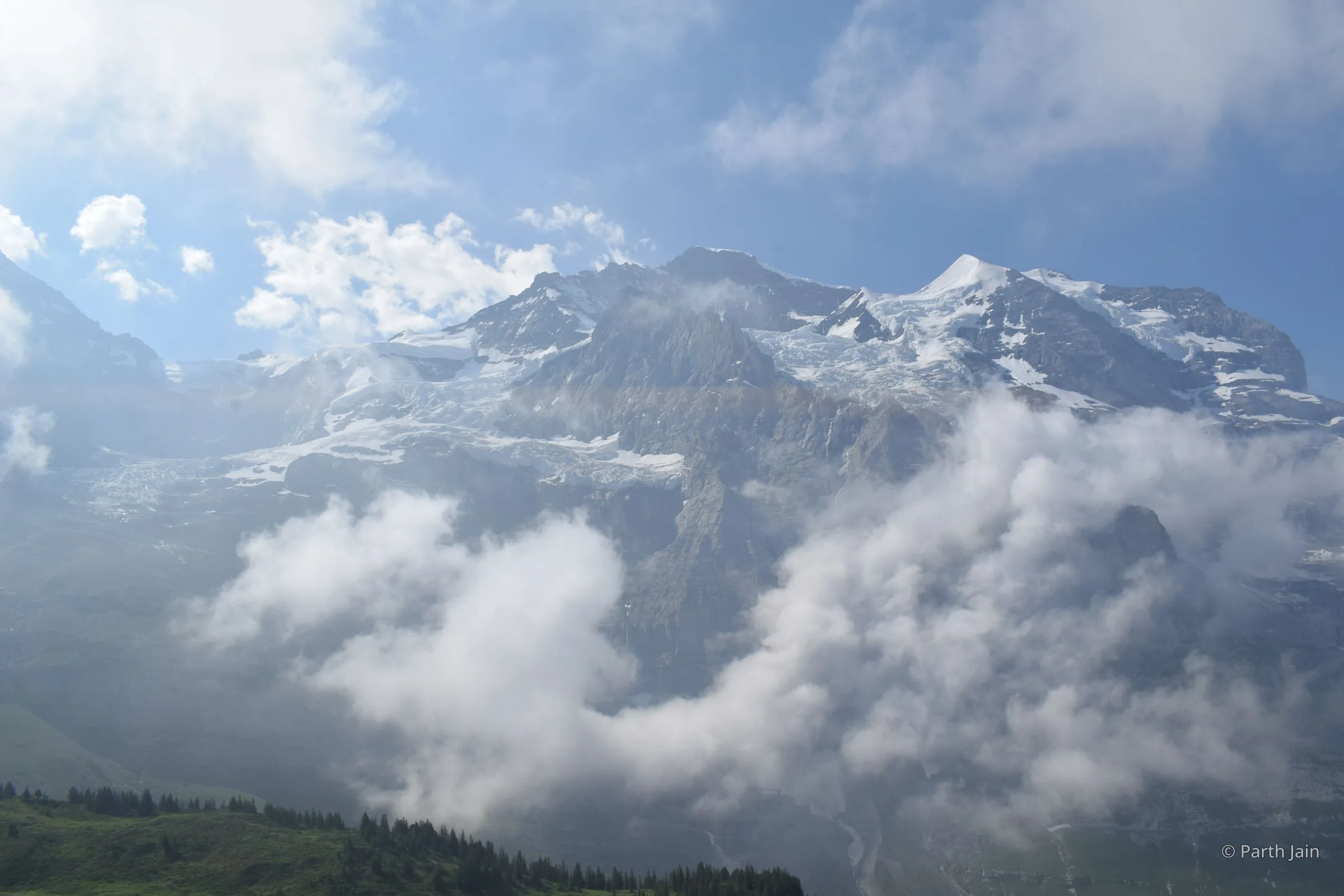
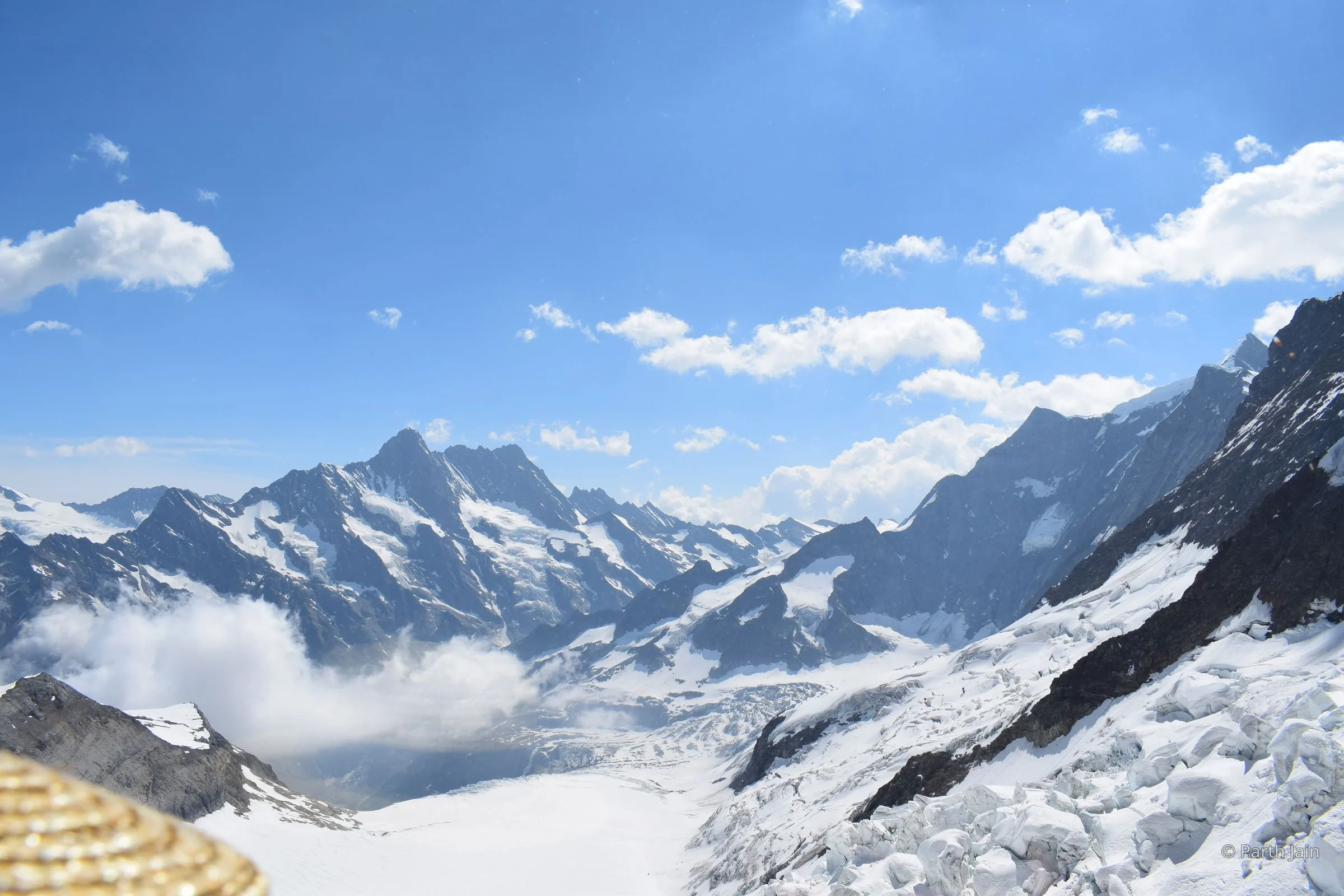
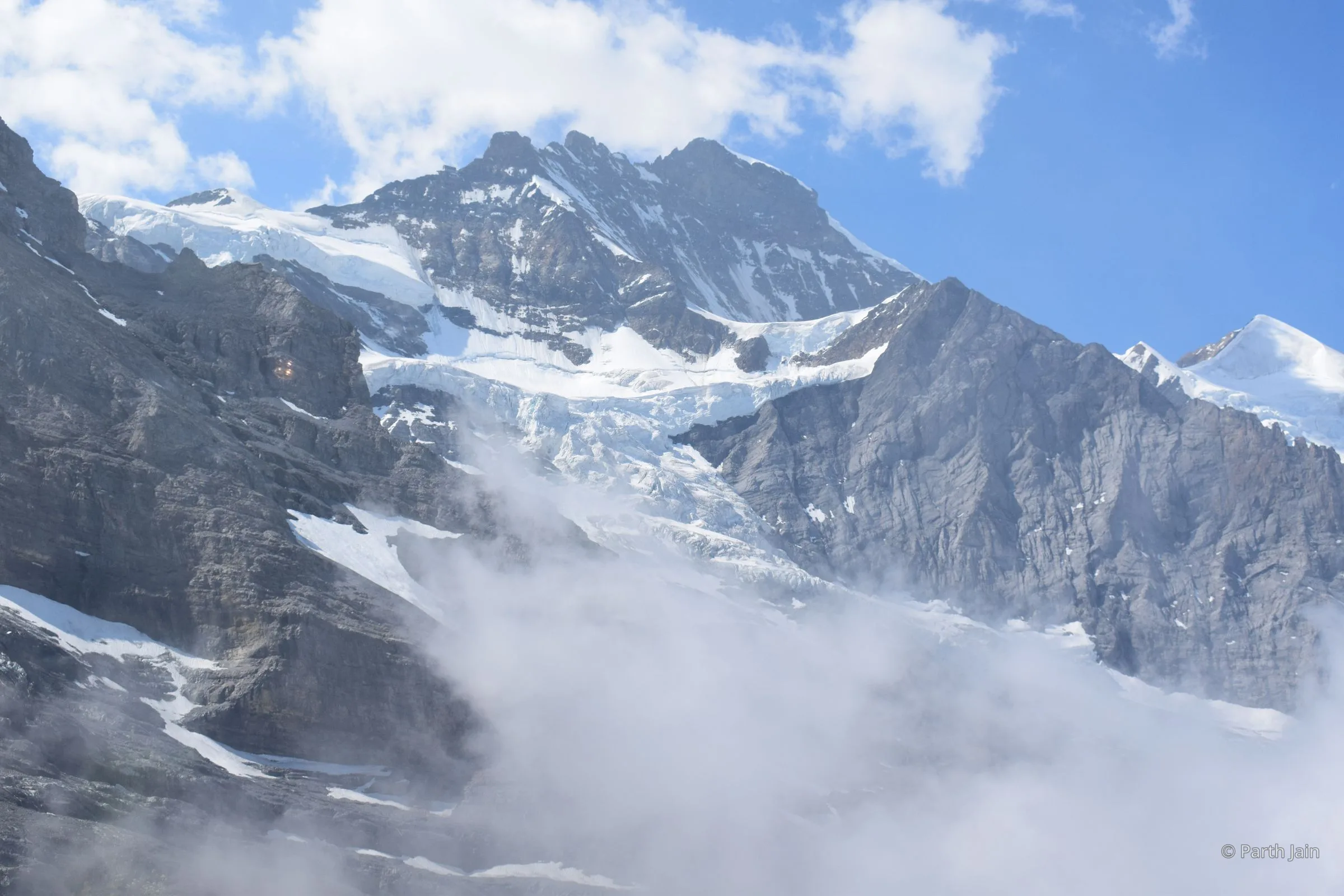
The Jungfrau ridge through a clearing in the cloud, seen from Jungfraujoch.
The mountain only showed itself for about ninety seconds.
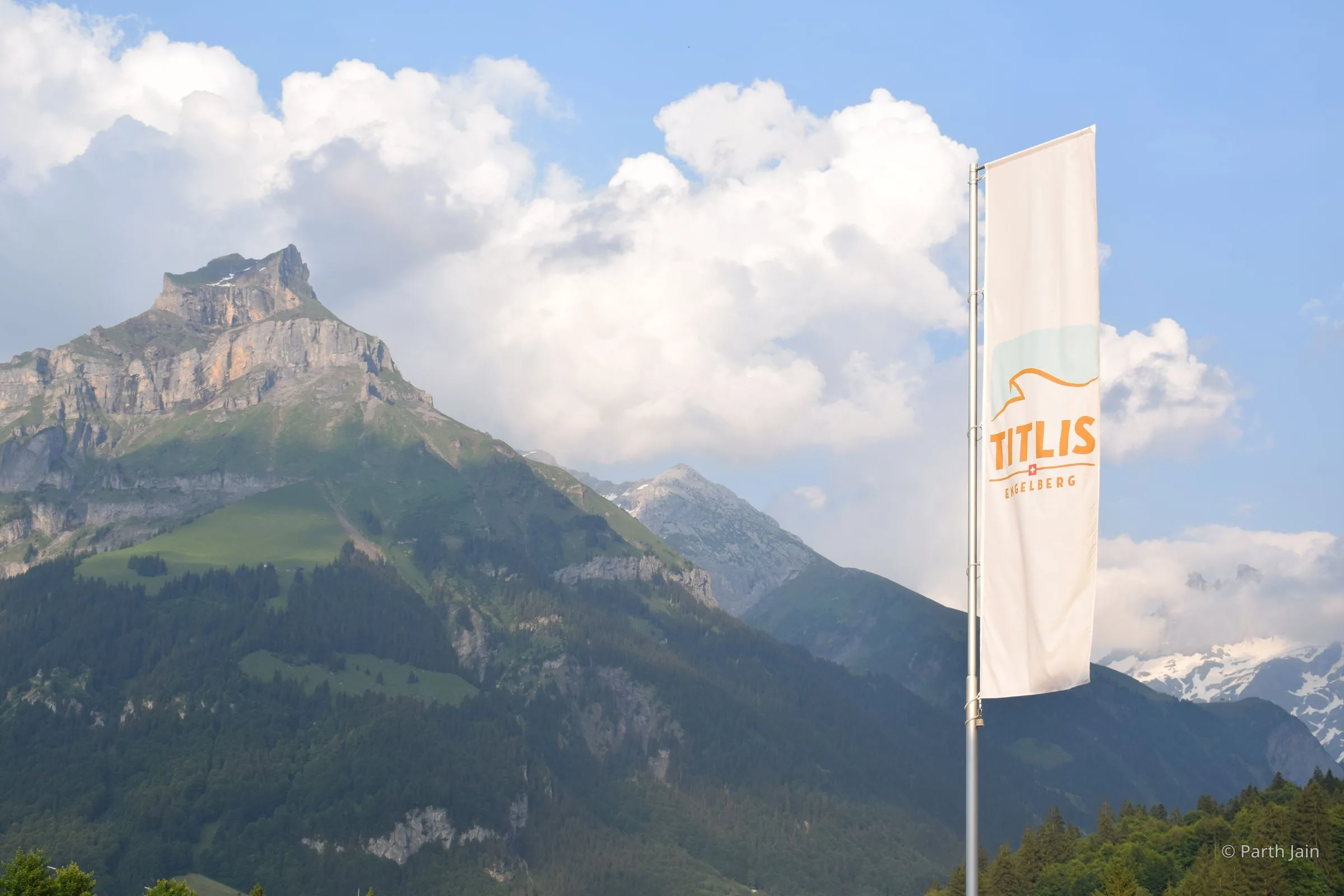
A Swiss flag flying in Engelberg with Mt. Titlis in the background.
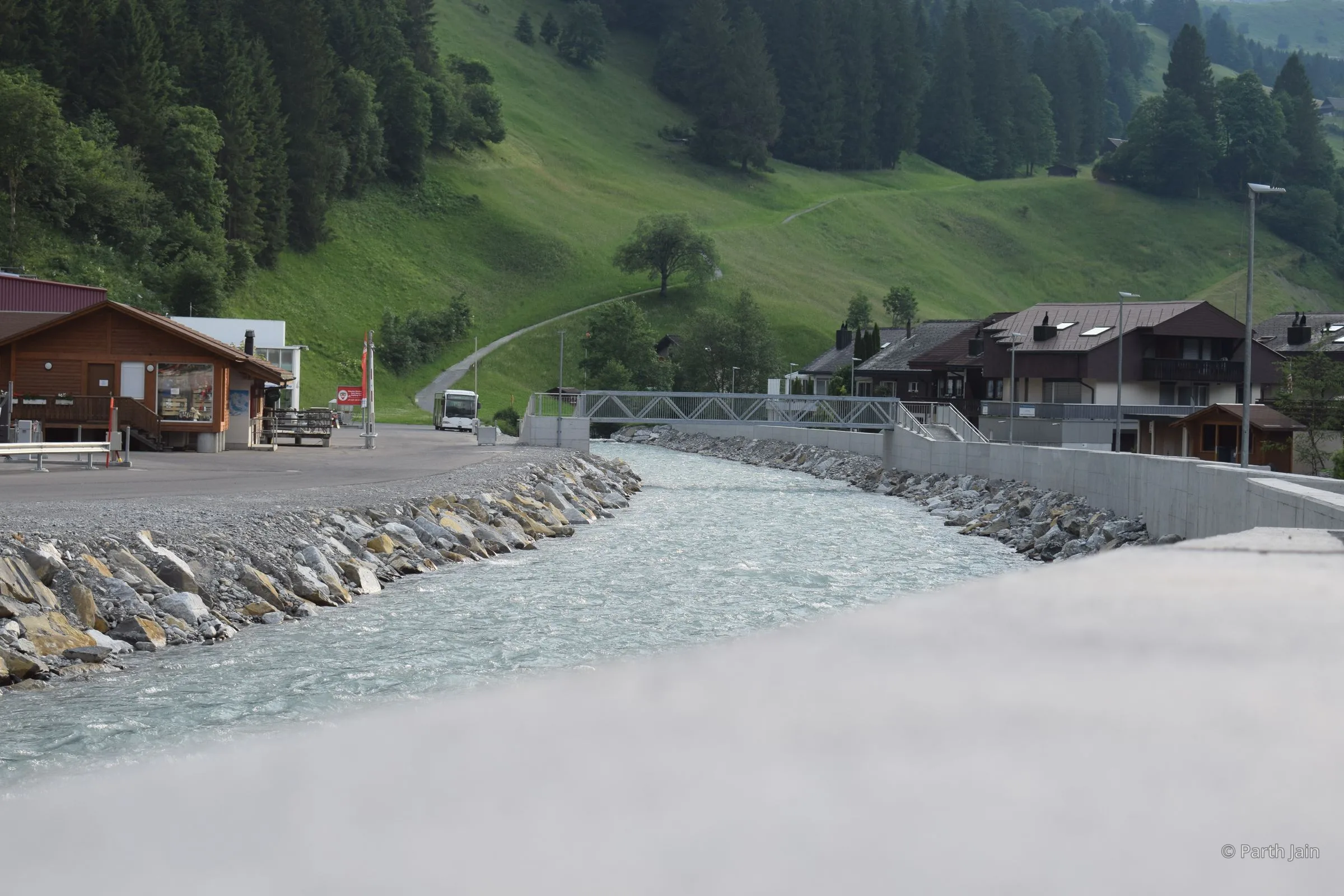
The Engelberg valley in the early morning, mist still on the meadows.
Engelberg, basecamp. The Swiss flag never not on something.
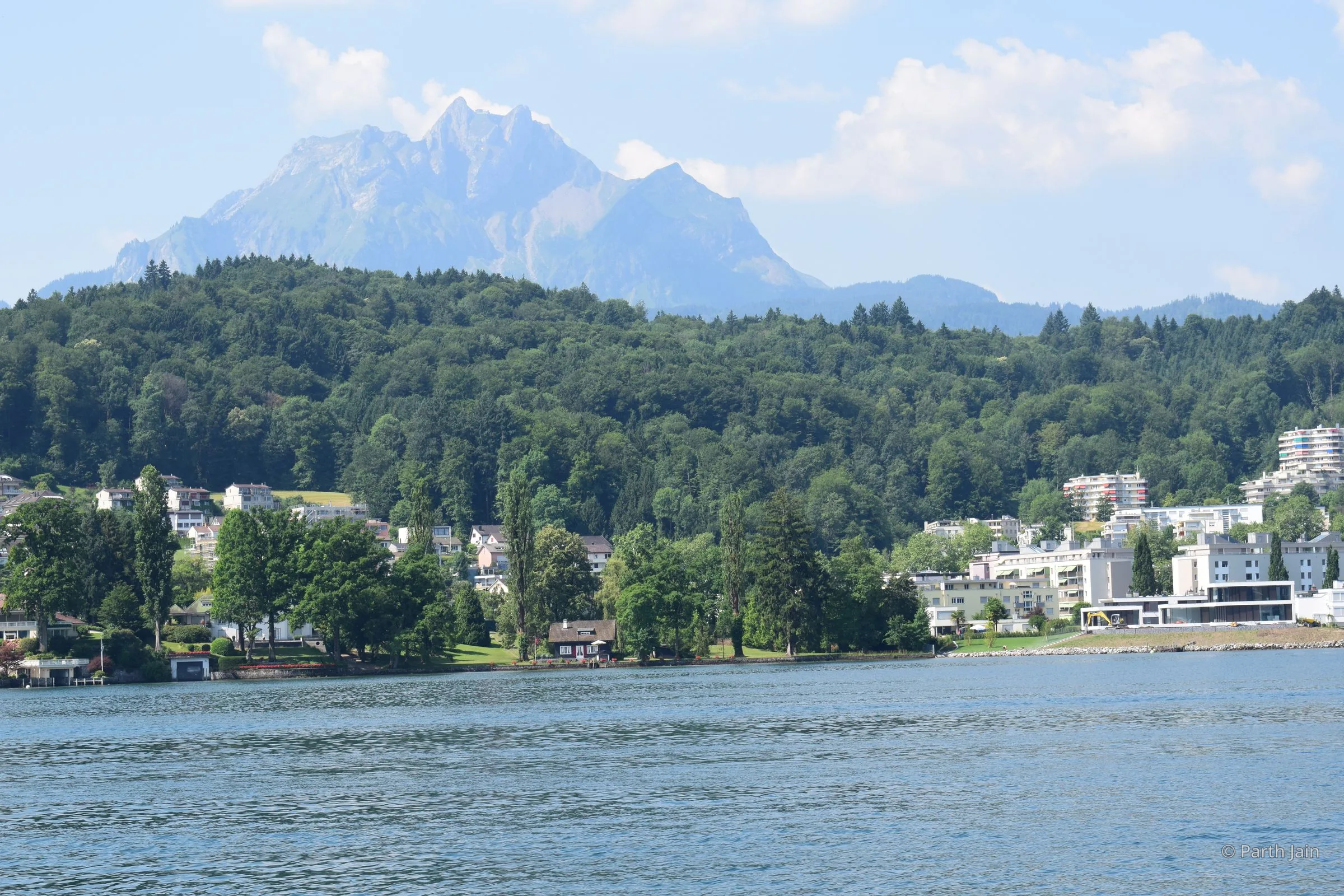
Lake Lucerne with Mt. Pilatus rising behind the far shore.
Lake Lucerne, Pilatus behind. The mountain we would climb in two days.
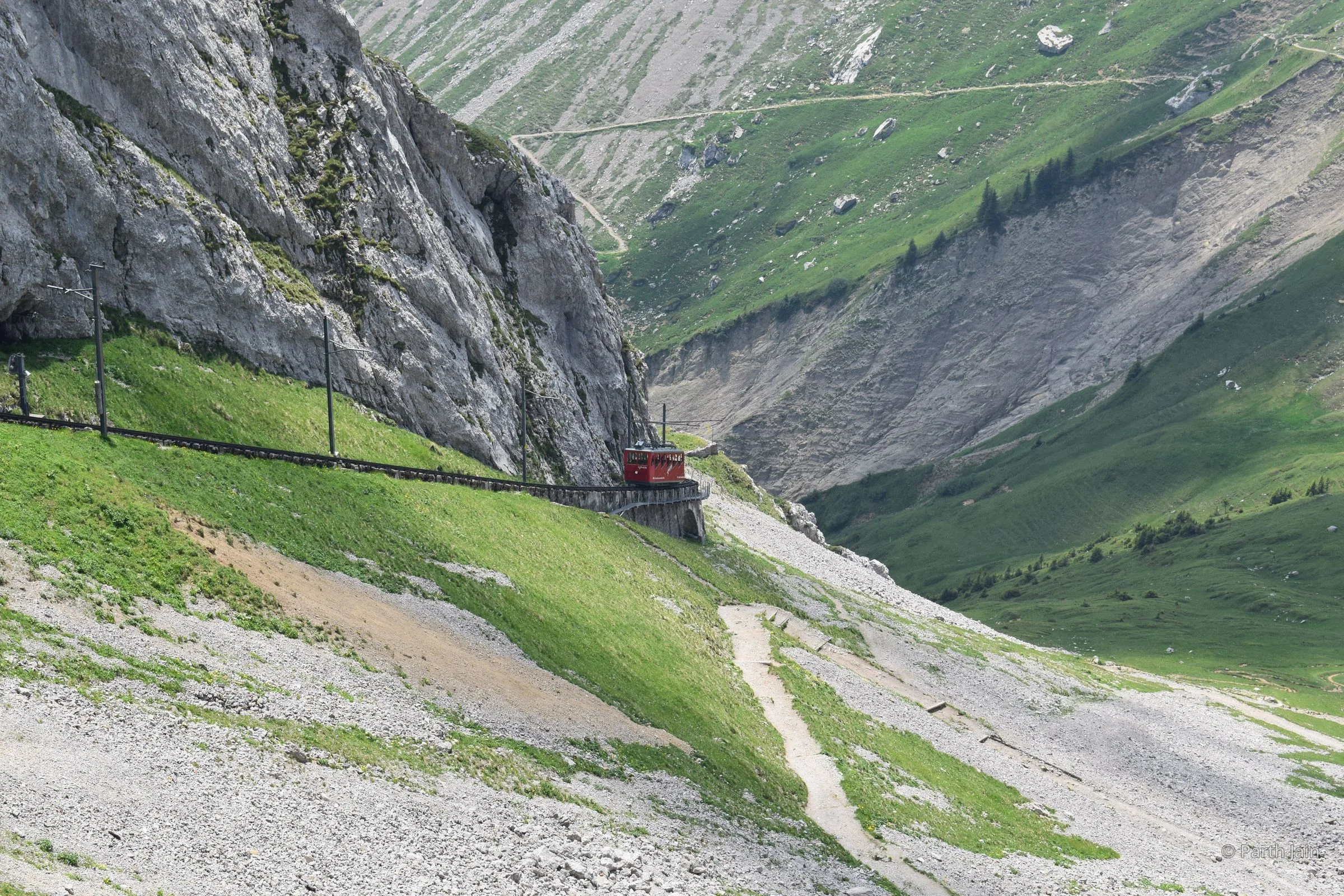
The Pilatus cogwheel train hugging a near-vertical cliff face.
The cogwheel railway up Pilatus. The track is forty-eight per cent at its steepest, and I remember finding that fact much funnier from the bottom than I did halfway up.

Two mountains, two ways. Pilatus, which holds the world record for the steepest cogwheel railway, was thrilling and a bit alarming in roughly equal measure. Mt. Titlis the next morning was a rotating cable car that turned three hundred and sixty degrees while it climbed, so you got the whole valley delivered to you slowly, like a course at dinner. Engelberg sat between them. We stayed there a week.
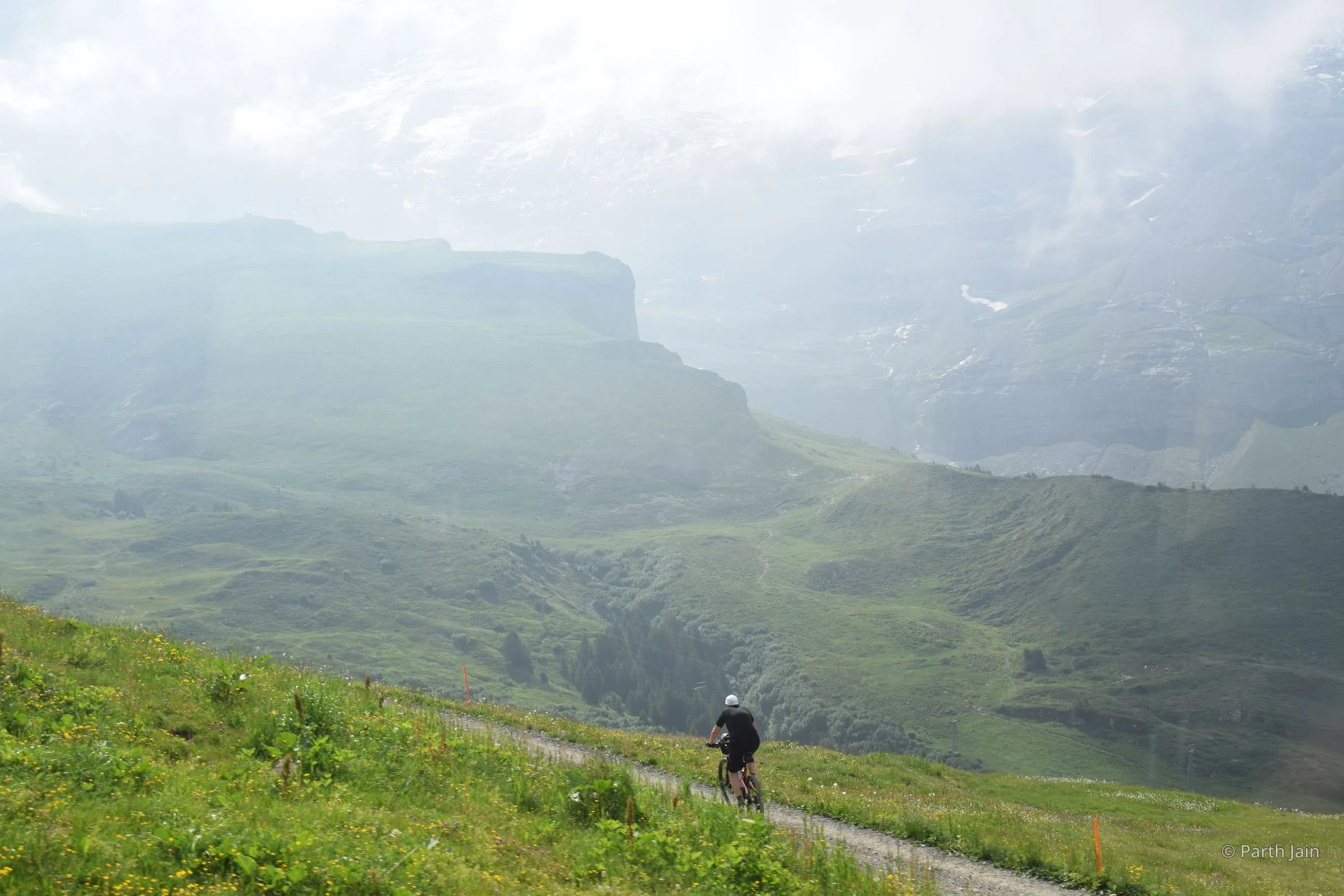
A lone cyclist riding along a mountain road in the morning.
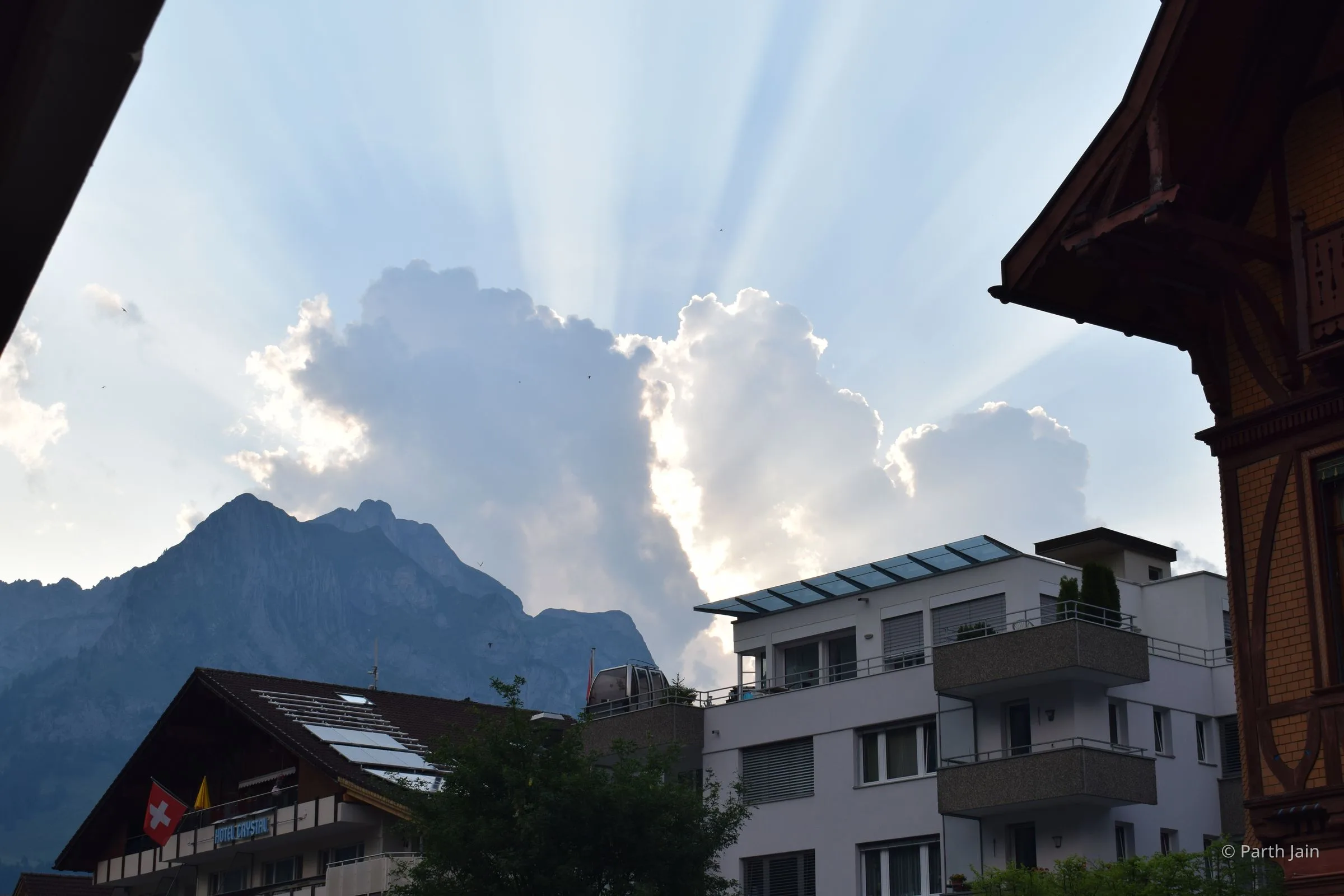
Sunrays cutting through cloud over an Alpine balcony view.
Engelberg, two mornings. Sun does eventually find its way in.

Of all of it, Jungfraujoch is the one I keep going back to in my head. They call it the Top of Europe. What they really mean is the highest railway station on the continent, at three thousand four hundred and fifty-four metres. To get there, an electric cogwheel train climbs nine kilometres up through the inside of the Eiger and Mönch, in a tunnel they began carving in 1896 with hand drills and dynamite. I did not appreciate what that meant until much later. At fourteen I was mostly thinking about whether the GoPro Dad had offered me before the trip would have been a smarter call for the train tunnels.
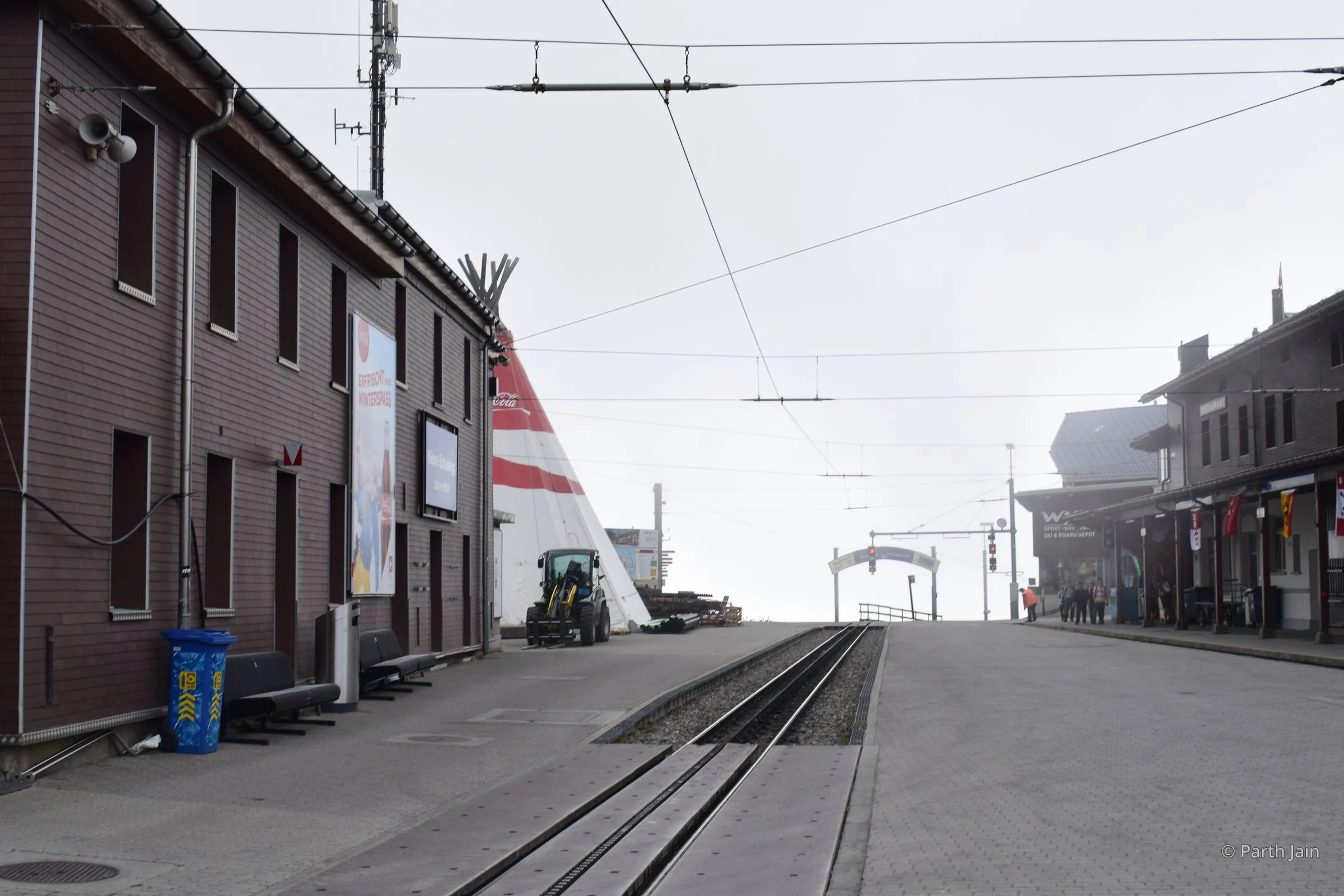
The Jungfraujoch viewing platform with fog moving across it.
Close detail of the Jungfrau ridge with wind-carved snow.
Three thousand four hundred metres. The platform comes in and out of fog all afternoon.
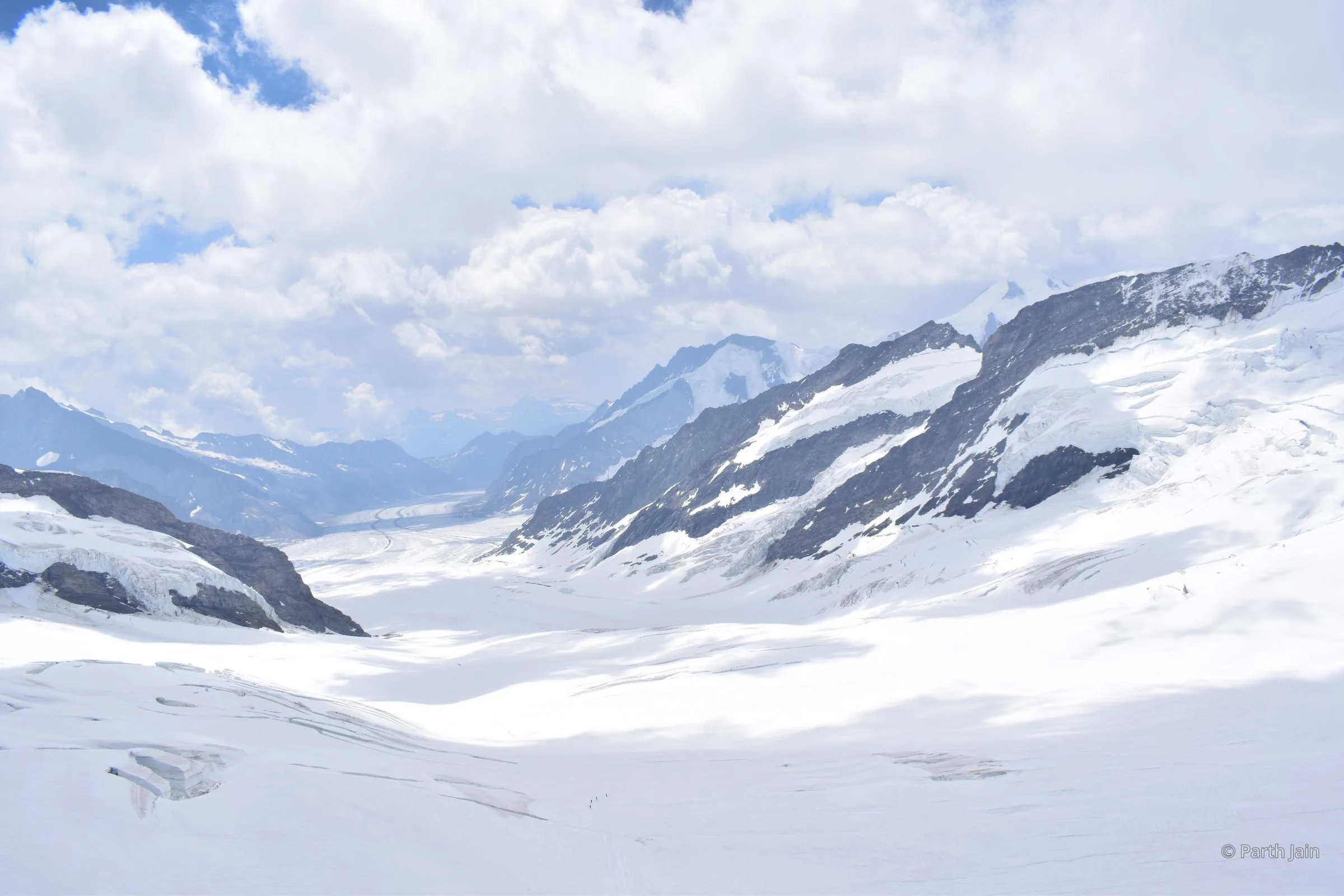
The Aletsch glacier seen from the Sphinx Observatory at Jungfraujoch.
Aletsch glacier from the Sphinx Observatory.
A wide view down the Aletsch glacier valley.
Same glacier, different window. The ice flows roughly two hundred metres a year.
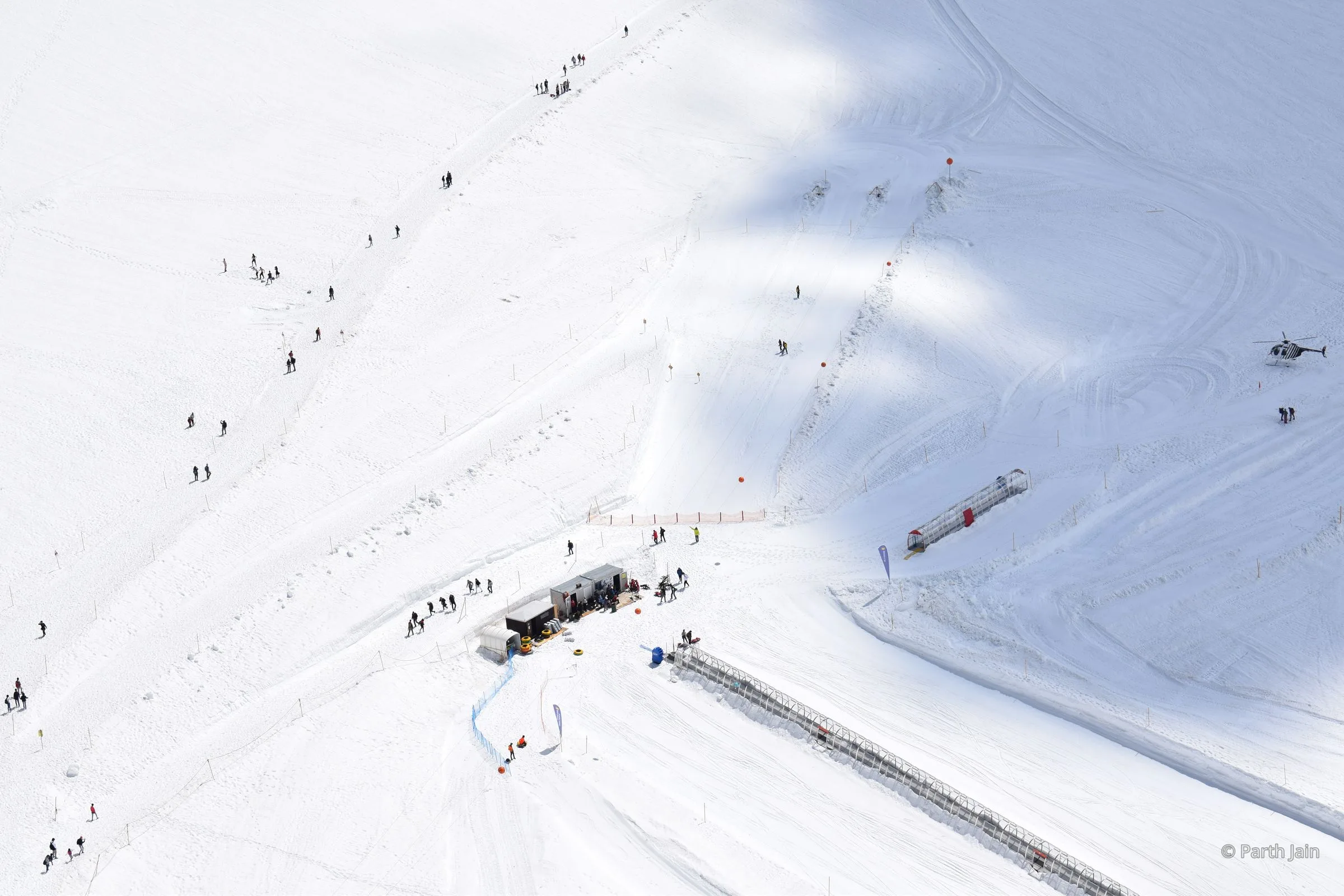
A small helicopter crossing a vast snowfield, seen from above.
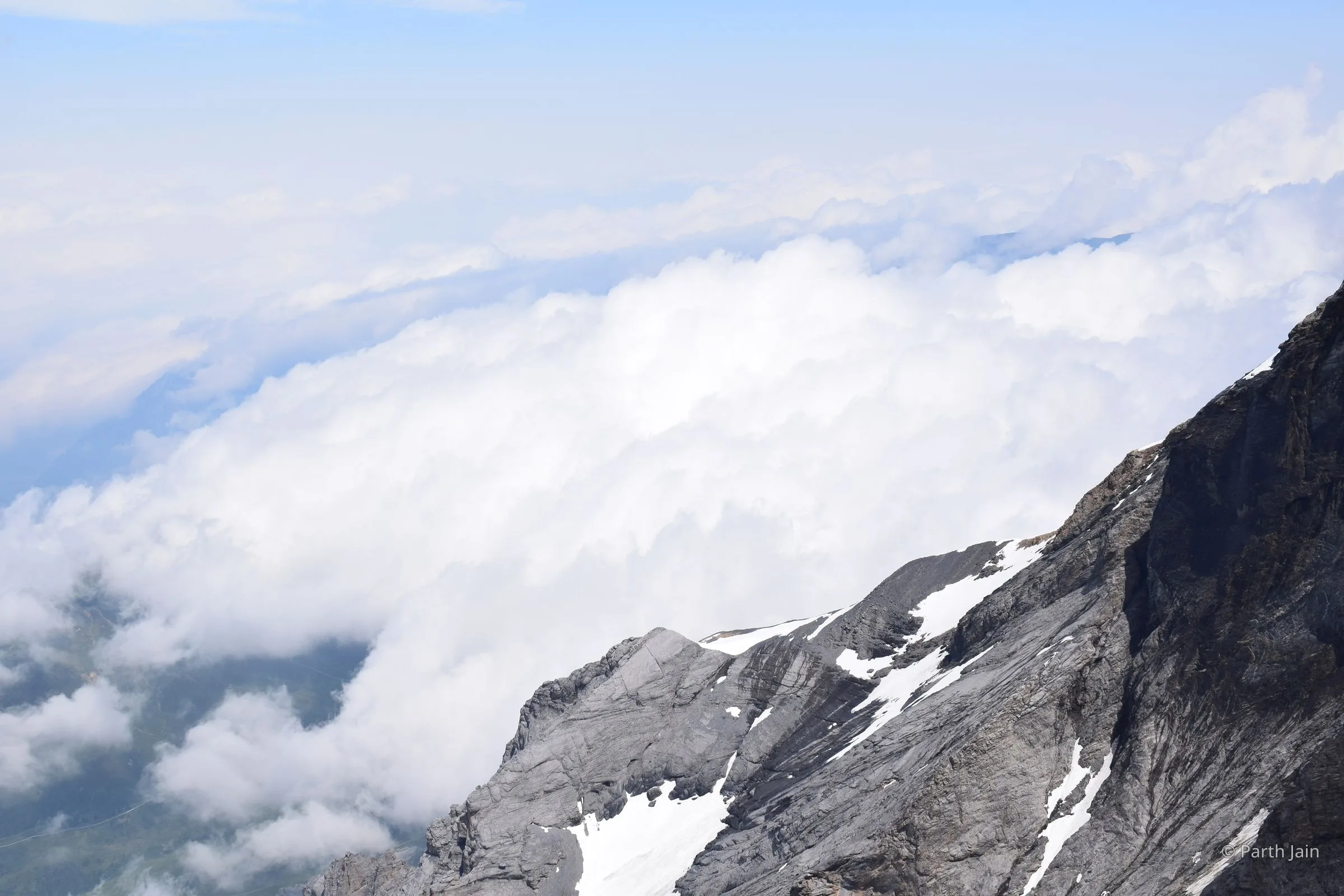
Looking down through a clearing in the cloud onto the valley below.
Looking down. There was a rescue helicopter off in one direction and a hole in the cloud directly below us.

Glacier 3000, on the way back. There is a suspension bridge between two summits, called the Tissot Peak Walk, that you cross with a glacier on either side, and an alpine coaster on rails that the lift operators clearly think is unremarkable. There was a giant Tissot clock at the platform; Dad was wearing his TAG Heuer and made a point of comparing the two. Both were good. The coaster was somehow more memorable.
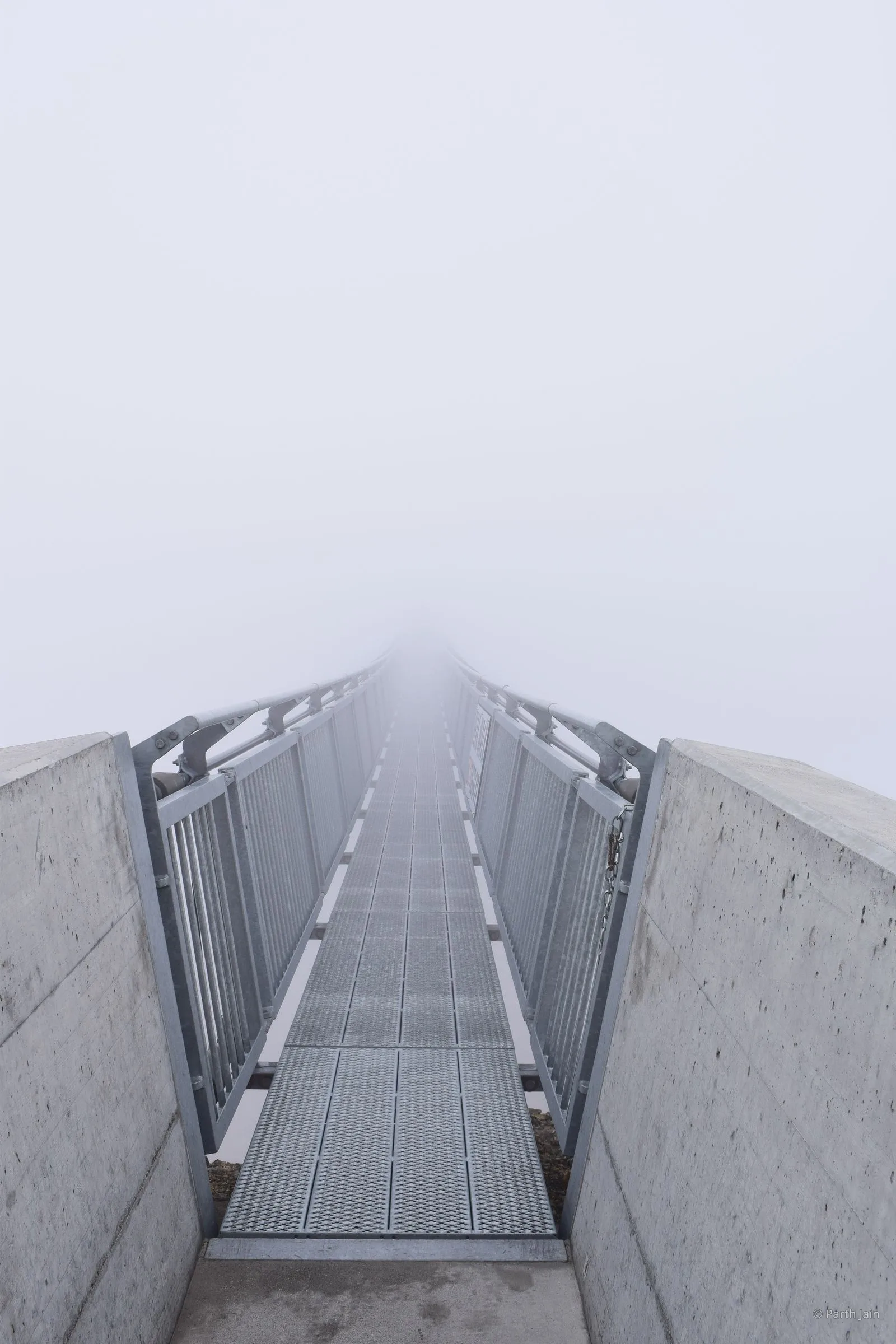
The Peak Walk suspension bridge at Glacier 3000, both summits faintly visible through fog.
Tissot Peak Walk, in fog. Both summits visible for about a minute.

What I remember is standing halfway across and trying to work out, with surprising seriousness, how long the fall would take if it gave way.
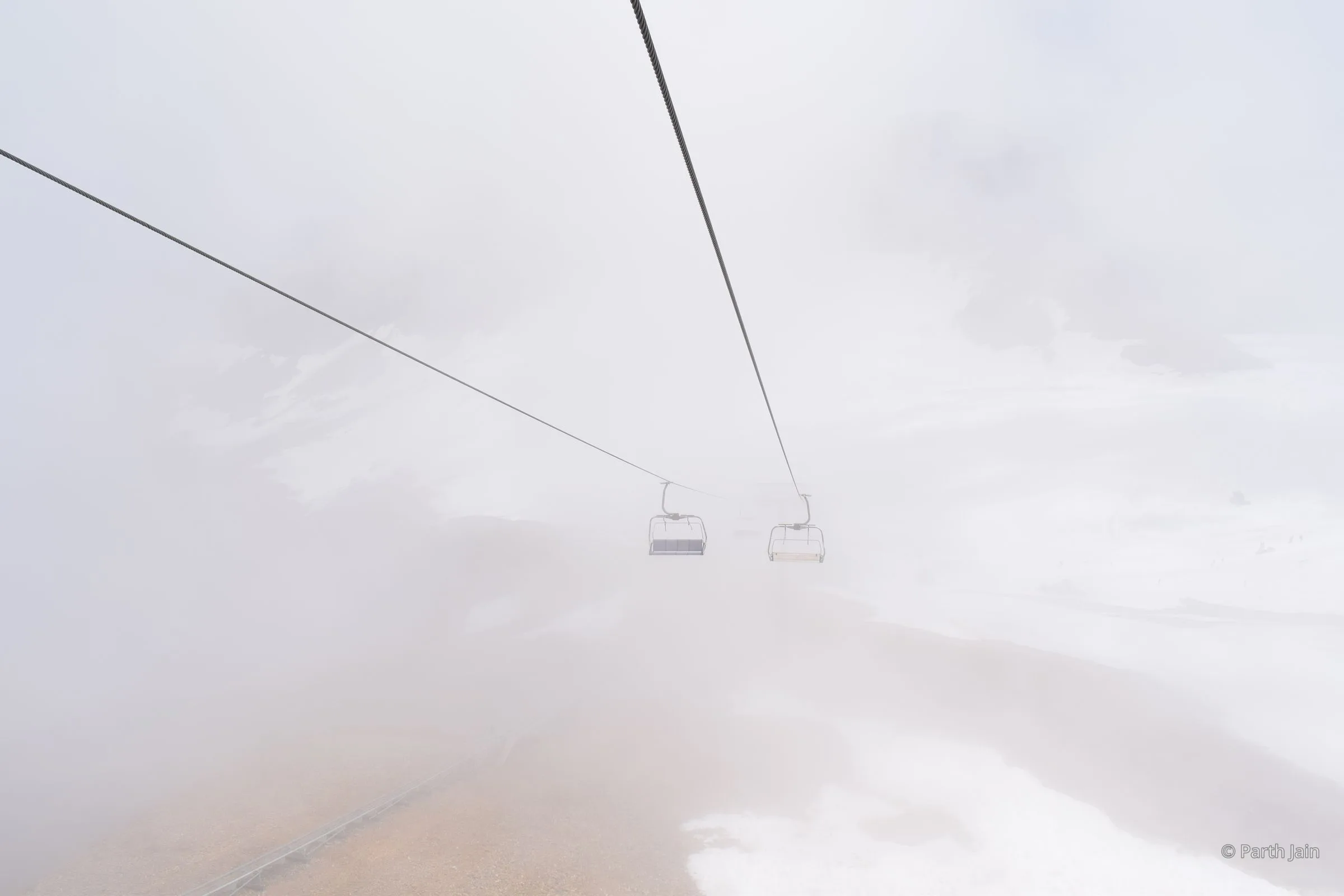
A row of empty chairlifts disappearing into fog.
Chairlifts emptied for the season. The cloud sits low here even in June.
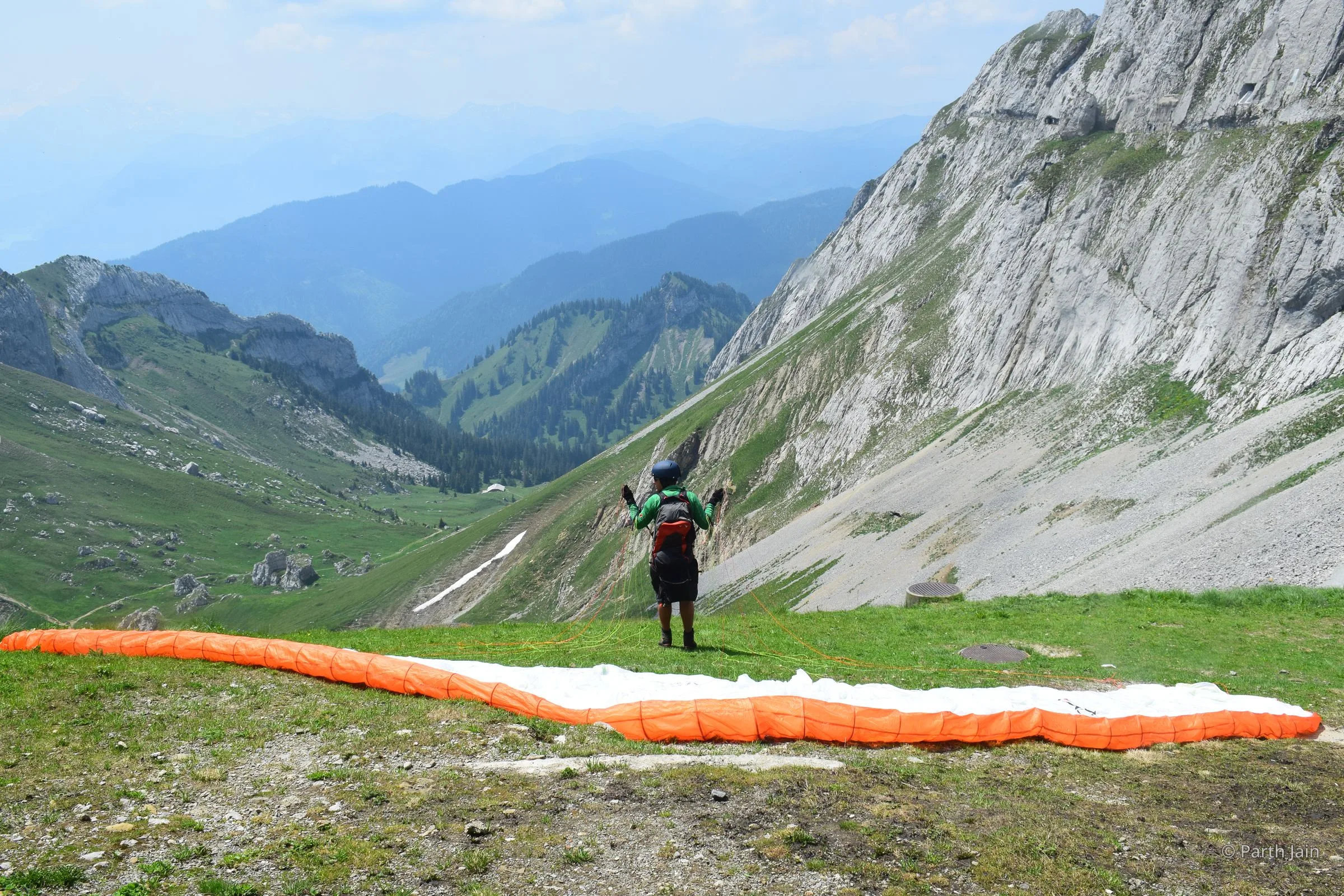
A paraglider running off the launch slope on Mt. Pilatus, canopy filling above.
He set everything up and was in the air in about ten minutes. Two steps off the cliff and there was nothing to photograph.